
Close
If you’ve ever stood in your kitchen thinking there has to be a better way to use this space, you’re not alone. Thousands of Manchester homeowners feel the same, especially those living in the Victorian and Edwardian terraces that make up so much of the city’s housing stock. A well-planned kitchen extension doesn’t just give you more room. It changes how your whole ground floor feels and works. In this guide, we’ll look at the layouts that genuinely work for Manchester homes, what they cost in 2026, and how to avoid the mistakes that catch people out.
Manchester’s housing is dominated by terraced and semi-detached properties built between roughly 1850 and 1930. Most of them share the same problem: the kitchen was an afterthought. It sat at the back of the house, narrow and separate from the rest of the living space, designed for a time when cooking happened out of sight and out of mind. That layout made sense in 1890. It makes very little sense today.
The good news is that these properties are genuinely well suited to extending. The side return, that narrow strip of wasted land running along the back corner of the house, is one of the most valuable pieces of unused space in Greater Manchester. Rear gardens tend to be generous enough that extending into them doesn’t leave you without outdoor space. And because so many of Manchester’s streets fall outside conservation area restrictions, permitted development rights apply in the majority of cases, meaning you can often build without a full planning application.
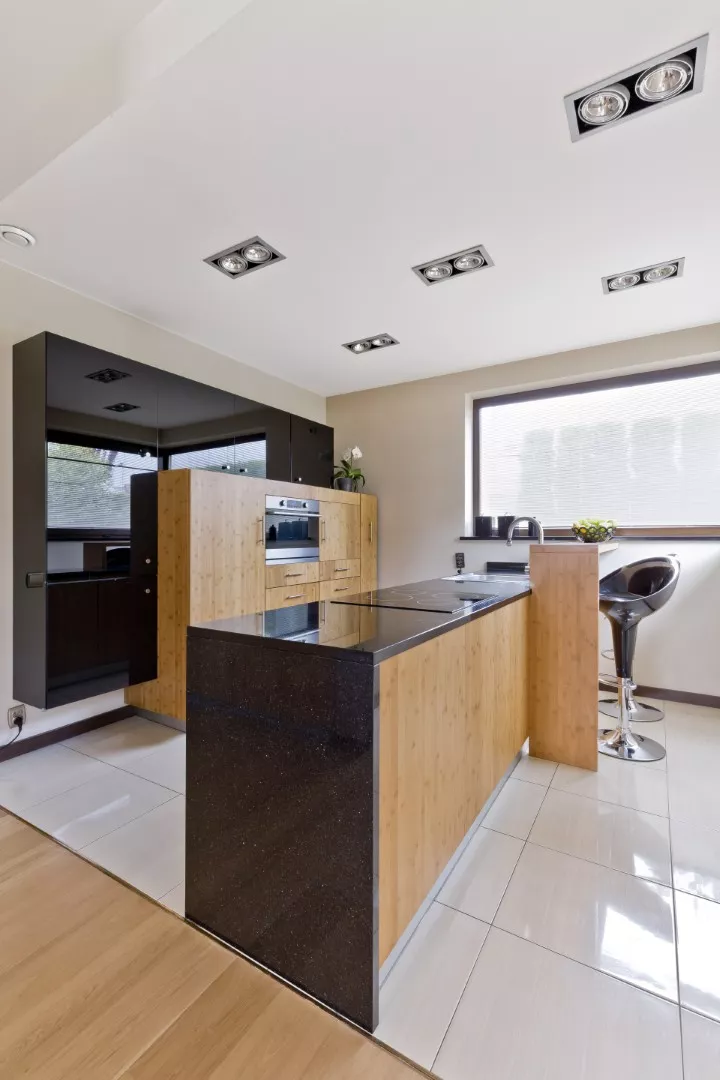
Before you get excited about bi-fold doors and kitchen islands, it’s worth understanding the three main extension types that suit Manchester homes. Each one solves a slightly different problem.
A rear extension pushes the back wall of your house out into the garden. It’s the most common option and the one most likely to fall under permitted development. You can extend up to 3 metres for a semi-detached or terraced property without planning permission, or up to 6 metres under the Larger Home Extension Scheme (which requires neighbour consultation but not full planning approval).
A side return extension fills in that narrow passage beside the back of the house. It makes your kitchen wider rather than longer. It works brilliantly for Victorian terraces and can transform a dark, cramped galley kitchen into something that actually functions.
A wraparound combines both, creating an L-shaped footprint that dramatically expands the ground floor. It’s the most expensive option but it’s also the one that creates the most usable, flexible space.
Cost is usually the first question, and the honest answer is that it varies more than most people expect. The overall project depends heavily on your starting point, the spec you choose, and which trades you bring in.
For a basic single-storey rear extension in Manchester, you’re looking at roughly £2,200 to £3,200 per square metre for the build itself. A typical 20 square metre extension to create a decent kitchen-diner will cost somewhere between £44,000 and £65,000 before kitchen units and appliances. Add a mid-range kitchen fit-out and you’re realistically budgeting £60,000 to £85,000 all in.
Side return extensions tend to be more cost-effective per square metre because you’re working with a smaller, more contained footprint. Costs typically run from £25,000 to £45,000 depending on how far back the extension runs and whether you’re adding significant glazing. A wraparound will usually start at £70,000 and climb well above £100,000 for larger footprints or premium finishes.
Always budget a 10 to 15 percent contingency. Structural surprises, particularly in older terraced properties, are common. You may hit unexpected drainage runs, original foundations that need underpinning, or load-bearing walls that require structural steelwork.
Building regulations approval is required for all extensions regardless of whether you need planning permission. This covers structure, energy efficiency, drainage, and fire safety. Factor in fees for a structural engineer and building control inspector from the outset.
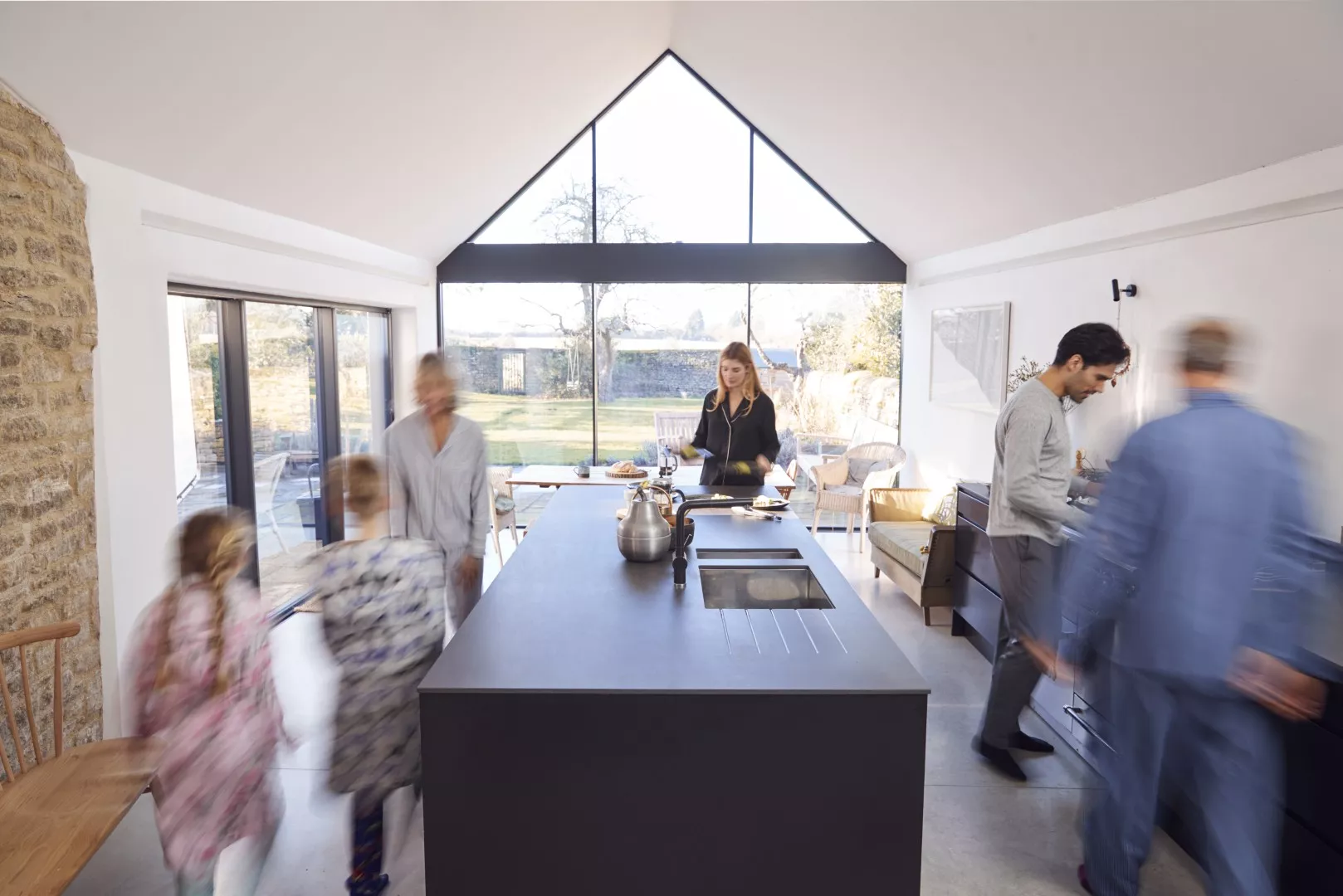
There’s no universal layout that suits every property, but these are the approaches that work best for the types of homes we see most often in Manchester.
This is the most popular layout, and it’s popular for a reason. Extending the rear of the house and replacing the back wall with bi-fold or sliding doors creates a space that feels connected to the garden even when the doors are closed. The kitchen runs along one or two walls, a dining area sits centrally, and the whole room opens up on warm days. For families with children, having eyes on the garden from the kitchen is a genuine quality of life improvement. This layout works best on properties with a south or west-facing garden that actually gets direct light in the afternoon.
If you’ve got a narrow Victorian terrace and only a small budget, the side return is the most cost-effective way to make a meaningful difference. By filling in that strip of wasted land beside the back of the house, you effectively turn a 2-metre wide galley kitchen into something 3.5 or 4 metres wide. That doesn’t sound dramatic on paper, but the difference in how the room functions is remarkable. You can fit an island or breakfast bar where previously there was barely room to pull a chair out. Glazing overhead, typically a roof lantern or continuous rooflight, compensates for the light you lose by building against the boundary wall.
This layout works particularly well for rear extensions of 6 metres or more. Rather than one large open room, you create three connected zones: a cooking zone at the back of the original house, a dining area in the extension, and a relaxed seating area nearest the garden. The zones are defined by changes in ceiling height, flooring, or furniture rather than walls. It gives you the openness of an open-plan layout while maintaining a sense of distinct spaces for different activities. This approach is especially suited to families who want the kids to be nearby without the whole room turning into a playroom.
The wraparound combines a rear extension with a side return to create an L-shaped footprint on the ground floor. It’s the most significant structural change you can make without going up, and it gives you genuine flexibility in how you use the space. The extra square footage can accommodate a utility room, a downstairs toilet, a pantry, or a home office area alongside the kitchen. For semi-detached properties in particular, where the side return runs along a substantial portion of the house rather than just the back section, the wraparound can add 20 to 30 square metres in a single project.
A lot of Manchester gardens face north. It’s just the way the terraced streets were laid out. If you extend a north-facing kitchen, the risk is ending up with a room that’s larger but still dark. The solution is glazing overhead rather than just at the back. A flat roof extension with a series of rooflights, or a lantern above the main dining area, floods the room with daylight even when there’s no direct sun coming through the back doors. This approach costs slightly more than a standard pitched or flat roof, but in terms of how the room feels day-to-day, it’s money well spent.
Some Manchester homes suit a layout that connects the front and back of the ground floor rather than just extending outward. This usually involves removing the wall between the original dining room and the kitchen, often combined with a smaller rear extension. The result is a long, light-filled room that runs the full depth of the house. It works well when the rear extension doesn’t need to be particularly large, and it makes the whole ground floor feel significantly bigger without a major footprint change. Structurally, you’ll need a structural engineer to specify the steel beam that carries the load where the wall was removed.
This approach treats the extension and the garden as one connected project rather than two separate ones. The extension itself might be fairly modest, perhaps 3 or 4 metres deep, but the external paving, seating, and planting are designed as a continuation of the indoor space. Level thresholds between the indoor floor and the patio are key here. A single step or height difference breaks the connection. When the floor runs continuously from inside to outside and the doors fold back completely, the effective living space in good weather nearly doubles. This works particularly well on south-facing plots in suburbs like Didsbury, Chorlton, or Hale.
Not every extension needs to be a large open-plan statement. For homes where the priority is function over space, a smaller extension of 3 to 4 metres combined with a dedicated utility room can solve the day-to-day frustrations that come with a busy family kitchen. Moving the washing machine, tumble dryer, and general household clutter into a separate room changes how usable the main kitchen feels. This layout often works for smaller semi-detached properties in areas like Stretford, Salford, or Eccles where garden depth is limited and a large rear extension would eat too much outdoor space.
If your extension is attached to the back of an original outrigger, or if planning allows a taller rear addition, a double-height kitchen or dining area can be one of the most impressive layouts available. The ceiling rises above the dining or kitchen area, with a band of high-level glazing or a glass gable bringing in light from above and behind. It’s more complex and more expensive, but the sense of space it creates is unlike any other layout. Some end-of-terrace properties in Manchester have the planning flexibility to achieve this more easily than mid-terrace homes.
Semi-detached homes in areas like Whalley Range, Withington, or Levenshulme often have a more generous side passage than Victorian terraces, sometimes 2 to 3 metres wide. Extending into this space creates a full new room at ground floor level rather than just widening an existing one. The side extension can become a generous kitchen, with the original kitchen converted to a dining room or utility area. It’s a less conventional layout but one that opens up options the rear extension simply can’t, including a separate entrance from the side of the property and a clear division between cooking and living spaces.
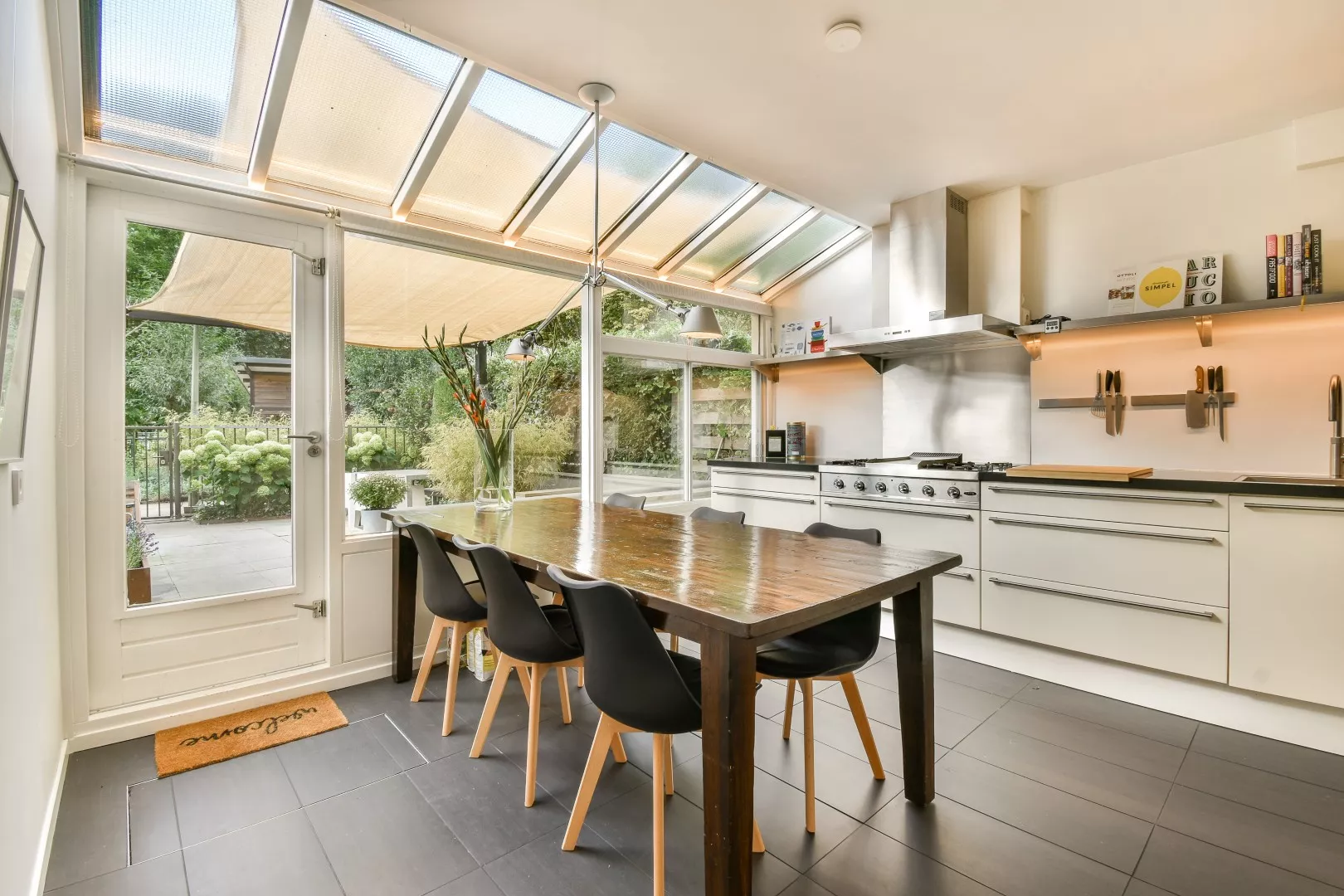
Most kitchen extensions on Manchester’s terraced and semi-detached homes will fall under permitted development, meaning you don’t need to submit a full planning application. But there are limits, and Manchester City Council has its own local rules that can affect what’s allowed in your specific area.
The standard permitted development limits for a single-storey rear extension are 3 metres deep for terraced and semi-detached properties, or 4 metres for detached houses. Under the Larger Home Extension Scheme, those limits can be extended to 6 metres and 8 metres respectively through a neighbour consultation process. This scheme is still in effect in 2026 and is worth using if you want a deeper rear extension without going through a full planning application.
Whatever you decide, building regulations approval is required. This is a separate process from planning permission and covers the structural integrity of the build, energy performance under Building Regulations Part L, drainage connections, and fire safety. Your contractor should manage this process, but it’s worth confirming before you sign anything that they have direct experience dealing with Manchester City Council’s building control team. Getting this wrong adds weeks and cost to a project.
If your property shares a boundary wall with a neighbour, which is almost every terraced house in Manchester, the Party Wall etc. Act 1996 applies. You’re legally required to give your neighbour written notice before starting any work that affects a shared wall or boundary. Most neighbours are fine with it, but the notice needs to go out correctly and at the right time, usually two months before work starts. A builder who doesn’t flag this process is a builder to be cautious of.
If your property is in a conservation area, which covers parts of Didsbury, Ancoats, Levenshulme, and several other Manchester neighbourhoods, the rules are more restrictive and you may need full planning consent even for a modest extension. Check with the council before doing anything else. Article 4 Directions in certain parts of the city can also remove permitted development rights entirely, so it genuinely pays to check your specific address rather than assuming.
A kitchen extension is one of the most significant building projects most homeowners will ever undertake. The layout decisions you make at the design stage affect how the space functions every single day, and the quality of the build determines whether it adds real value to your home or creates expensive problems down the line.
Dream Homes Construction works with Manchester homeowners across all of these extension types, from compact side returns in Levenshulme to large wraparound projects in Altrincham. We handle the full process from initial design through to completion, coordinating planning and building regulations on your behalf and managing every trade on site. Dream Homes Construction is known for its reliable, highly skilled tradespeople and its full-service approach, covering design, build and completion. Every project is covered by public liability insurance and a works warranty for total peace of mind.
If you’re thinking about a kitchen extension and want an honest assessment of what’s possible for your property and budget, get in touch. We offer a free initial consultation and can walk you through the options that actually make sense for your home.
