
Close
When you’re hiring a main contractor in Manchester, checking their insurance isn’t just a box-ticking exercise. It’s one of the most important things you can do to protect yourself, your property, and your investment. A contractor without proper insurance is a walking liability, and if something goes wrong, you could end up footing the bill for injuries, damage, or legal costs that should never have been your responsibility. Yet many homeowners don’t know what insurance contractors should actually have, what each policy covers, or how to verify it’s genuine and current. This guide breaks down the five essential insurance policies your Manchester main contractor needs, explains exactly what each one protects you from, and shows you how to check they’re properly covered before you sign anything or hand over any money.
You might think contractor insurance is their problem, not yours. That’s not quite true. If your contractor doesn’t have adequate insurance and something goes wrong, the consequences fall on you. A worker injured on your property could sue you directly if the contractor has no employers’ liability cover. Damage to your neighbour’s property from building work could leave you liable if the contractor lacks public liability insurance. Work that fails and needs expensive remediation leaves you paying twice if there’s no professional indemnity or warranty backing.
In the UK, some insurance policies are legally required for contractors who employ staff, while others are contractual requirements that clients typically insist upon. A professional contractor carries comprehensive insurance not just to comply with the law but to demonstrate they’re serious about their business and their responsibilities. Cheap cowboys often cut costs by skimping on insurance or letting policies lapse. Checking insurance certificates before you hire someone is one of the fastest ways to separate professionals from chancers.

This is the big one and it’s non-negotiable. Public liability insurance covers claims made by third parties for personal injury, death, or loss or damage to property arising from the contractor’s business activities. Third parties means anyone who isn’t an employee of the contractor. That includes you as the client, your neighbours, visitors to your property, and members of the public.
On a building site, the risks are endless. A falling brick could injure a passerby. A skip could block access and cause an accident. Dust and debris could damage neighbouring cars or property. Workers could accidentally damage your existing house while building the extension. Your neighbour’s fence could collapse because of groundwork vibrations. Every single one of these scenarios is a potential public liability claim.
While public liability insurance is not legally required, it is nearly always a contractual requirement in the construction industry, with most reputable businesses insisting contractors have cover in place before entering into contracts. The standard minimum is £2 million, but many larger projects or commercial clients require £5 million or even £10 million. The amount of public liability cover needed typically depends on the size and type of construction projects, with clients often specifying minimum cover ranging from £1 million to £5 million or more for larger contracts.
What to check: Ask to see the public liability insurance certificate. Check it’s current and hasn’t expired, confirm the level of cover meets your needs, usually at least £2 million for residential work, and verify the insurer’s name and policy number. You can contact the insurer directly to confirm the policy is active if you have any doubts. Don’t accept excuses about certificates being in the post or renewals being processed. A legitimate contractor will have current proof of cover available immediately.
In the United Kingdom, the law mandates that any business employing one or more people must have employers’ liability insurance. This covers claims from employees or workers who suffer injury or illness as a result of their work. The minimum required cover is £5 million, though most policies actually provide £10 million as standard.
Employers’ liability is legally required under the Employers’ Liability (Compulsory Insurance) Act 1969. Without it, contractors face heavy fines of up to £2,500 per day for each employee, and potential legal action which can jeopardise their operations. Construction is one of the most dangerous industries in the UK. Workers on your site face risks from falls, cuts, crushing injuries, manual handling injuries, and exposure to hazardous materials. If someone gets hurt and the contractor doesn’t have employers’ liability insurance, that worker might sue you as the property owner instead.
Even if your contractor is a sole trader with no employees, check if they use subcontractors. Some subcontractors count as employees for insurance purposes depending on their contract structure. Limited companies employing family members are not exempt from the legal requirement to hold employers’ liability insurance, unlike sole traders who employ only close family members.
What to check: Confirm the contractor has employers’ liability cover if they employ anyone or use subcontractors regularly. Check the certificate shows at least £5 million cover. Verify it’s current and the dates are valid. Ask how many people work for them to ensure the policy covers their actual workforce. Be particularly careful with contractors who claim to work alone but then turn up with a team. That’s a red flag that they might not have proper cover.
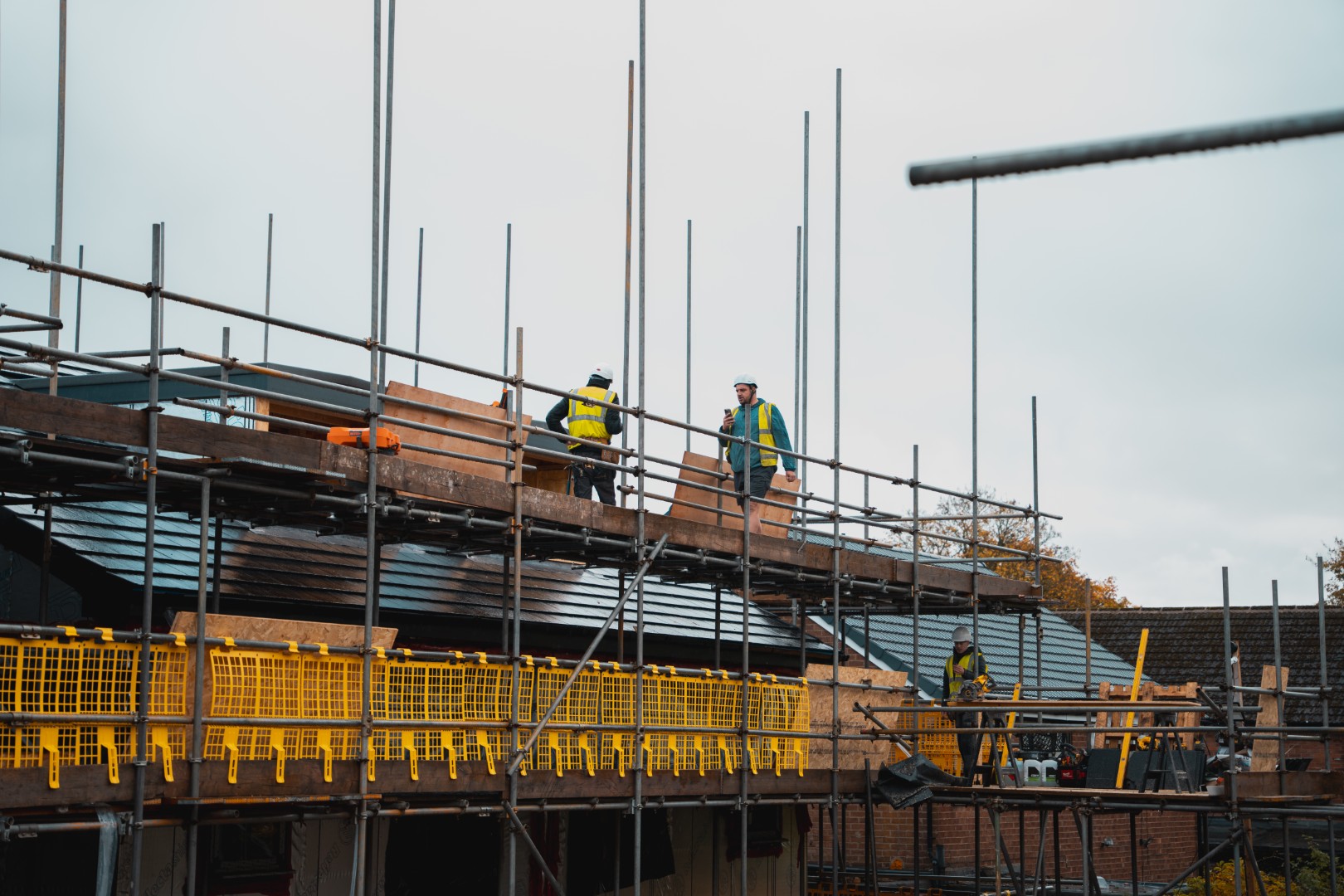
Contract works insurance, also called contractors’ all risks insurance (CAR), covers physical damage to the building works themselves during construction. This includes the structure being built, materials on site, temporary works like scaffolding, and plant and equipment being used. This type of cover is essentially a given in the industry, designed to protect builders and tradespeople against loss or damage to ongoing construction works, materials, plant and equipment on a construction site.
Why does this matter to you? Because if your half-built extension burns down, gets vandalised, or is damaged by a storm, someone needs to pay to rebuild it. Contract works insurance covers these situations. Without it, the contractor might expect you to pay for materials and labour all over again, or they might simply walk away leaving you with a ruined project and no recourse.
On some projects, the client takes out contract works insurance rather than the contractor. This is common on larger builds. But for most residential work in Manchester, the contractor should have their own policy that covers projects up to a certain value. The policy limit needs to match or exceed your project’s total contract value.
What to check: Confirm the contractor has contract works insurance or that you’re arranging it yourself as part of your building contract. Check the policy limit is high enough to cover your project’s rebuild cost, not just the contract price. Verify what’s covered and what’s excluded, with particular attention to weather damage, theft, and vandalism. Understand who pays the excess if a claim is needed. Some contractors have high excesses that they’ll try to pass on to you.
Professional indemnity insurance is increasingly required for building contractors, especially if they offer any design, specification, or advisory services, as it covers claims for financial loss resulting from professional negligence or errors in advice. If your contractor is doing design and build, where they’re responsible for both designing and constructing your project, professional indemnity insurance is essential.
This insurance covers mistakes in design, specification errors, poor professional advice, and breach of professional duty that leads to financial loss. Common claims include designs that don’t meet building regulations requiring expensive changes, specifications that result in structural problems, advice that proves incorrect and costs the client money, and errors that delay the project causing financial loss.
Even contractors who don’t think they offer design services might need this cover. If they recommend materials, suggest structural solutions, or provide any advice that you rely on when making decisions, that could be considered professional advice. Many contracts require professional indemnity insurance to be maintained for 6 or 12 years after project completion, so check this is included.
What to check: If your contractor is providing any design or advisory services, confirm they have professional indemnity insurance. Check the level of cover, usually £1 million to £5 million depending on project size. Verify how long after completion the cover remains active, ideally 6 to 12 years. Understand what’s specifically excluded because professional indemnity policies often have detailed exclusions around certain types of advice or work.
If your contractor is supplying products or materials as part of their service, they might need product liability insurance. This covers claims arising from defective products that cause injury or damage. For example, if they supply and fit windows that later fail and cause water damage, or install electrical components that turn out to be faulty and cause a fire, product liability insurance covers the resulting claims.
Many contractors rely on their suppliers’ product warranties rather than carrying separate product liability insurance. That’s acceptable as long as you understand who’s responsible if something goes wrong. If the contractor is just fitting products you’ve purchased separately, their public liability insurance usually covers poor installation but not product defects. If they’re supplying products as part of a package, check they either have product liability cover or can demonstrate the manufacturer’s warranties protect you adequately.
What to check: Clarify whether your contractor is supplying materials or just installing them. If they’re supplying, ask about product liability cover or manufacturer warranties. Get written confirmation of what warranties apply to supplied products and how long they last. Understand the process for claiming if a product fails, who you contact, and what’s covered.
Asking for insurance certificates is one thing. Making sure they’re real and current is another. Insurance fraud in construction is more common than you might think. Some contractors present expired certificates hoping you won’t check the dates. Others show certificates from policies they’ve since cancelled. A few even present fake certificates.
Here’s how to verify what you’re being shown is legitimate. Check all the dates carefully, including the policy start date, the expiry date, and the date the certificate was issued. A certificate issued months or years ago might not reflect the current policy status. Confirm the contractor’s business name on the certificate matches their actual trading name and company registration. Mismatches can indicate the certificate belongs to a different company or is outdated.
Note the insurer’s name and policy number. You can contact the insurer directly to verify the policy is active. Most insurers have teams that handle third-party verification requests. If the contractor objects to you verifying their insurance, that’s a massive red flag. Check the level of cover shown on the certificate matches what you were told. Some contractors claim they have £5 million public liability when their policy is actually only £2 million.
For major projects, consider asking the contractor to add you as a named interested party on their insurance policies. This means the insurer will notify you if the policy is cancelled or not renewed. It costs the contractor nothing and gives you ongoing protection throughout the build.
If you discover partway through a project that your contractor’s insurance has lapsed, expired, or never existed, you need to act immediately. Stop all work on site until the insurance situation is resolved. Do not allow workers on your property without valid insurance cover. Document everything in writing, including when you discovered the issue, what the contractor has told you, and any communications about resolving it.
Give the contractor a written deadline to provide valid, current insurance certificates. If they can’t or won’t, you’re entitled to terminate the contract for breach. Seek legal advice before taking this step to understand your position and your options. If work has already been done without insurance, you might have a bigger problem. Any damage, injuries, or issues arising from that uninsured work could leave you personally liable.
This is why checking insurance before anyone starts work is so critical. By the time you discover a problem, you might already be exposed to risks you never agreed to take on.
Some warning signs mean you should seriously reconsider hiring a contractor, regardless of how cheap their quote is. If they can’t or won’t provide insurance certificates when asked, walk away. If the certificates they provide are expired, low limits, or from an insurer you can’t verify, walk away. If they say insurance is included but refuse to show you the actual policies, walk away.
If they suggest you take out the insurance yourself for their work, unless this is clearly specified in a formal contract with proper advice, be very cautious. If they claim insurance isn’t necessary for your type of project, they’re either ignorant or dishonest. Either way, don’t hire them. If they get defensive or aggressive when you ask about insurance, this shows how they’ll react to any challenge during the build.
Professional contractors expect insurance questions. They have the certificates ready and provide them without fuss because they know it’s a standard part of doing business properly. Anyone who makes insurance verification difficult is telling you something important about how they operate.
Even with comprehensive insurance, you still need a detailed written contract that sets out what work is being done, the price and payment terms, the timeline, what happens if things go wrong, and how disputes will be resolved. Insurance protects against accidents, mistakes, and unforeseen problems. It doesn’t protect you against a contractor who simply does a poor job or fails to deliver what was agreed.
Your contract should reference the insurance requirements and ideally include copies of the insurance certificates as appendices. It should state that the contractor must maintain adequate insurance throughout the project and notify you immediately if any policy is cancelled or not renewed. Some contracts include a clause allowing you to take out insurance at the contractor’s expense if theirs lapses.
All of this might sound excessive for a domestic building project, but these protections exist for good reasons. Construction projects involve significant sums of money, considerable risk, and the potential for things to go badly wrong. Proper insurance and proper contracts are the foundations of a professional relationship that protects everyone involved.
When you work with us, insurance isn’t something you need to chase or verify because we provide full documentation upfront as standard. We carry comprehensive cover across all five essential policies including public liability insurance to £5 million, employers’ liability to the legal minimum, contract works insurance covering the full project value, professional indemnity for our design and build services, and product liability for materials we supply.
Dream Homes Construction is known for its reliable, highly skilled tradespeople and its full-service approach, covering design, build and completion. Every project is covered by public liability insurance and a works warranty for total peace of mind. We provide copies of all current insurance certificates before work starts and we’re happy for clients to verify them directly with our insurers. We also maintain our cover throughout the project and notify clients immediately if anything changes, though it never does because we renew well in advance.
Our insurance isn’t just about ticking boxes. It’s about demonstrating that we take our responsibilities seriously and that we’re a stable, professional business that’s been operating in Manchester long enough to build relationships with reputable insurers. If you’re planning a building project and want to work with a contractor where insurance is never a question mark, get in touch. We’ll walk you through our cover, answer any questions, and show you exactly how we protect you and your investment from day one.
